What's New on STW
We add new printable worksheets, games, and teaching tools all the time! This page highlights some of our most recent additions to the site.
1,502 new files added over the past 365 days.

(added October 8, 2026)
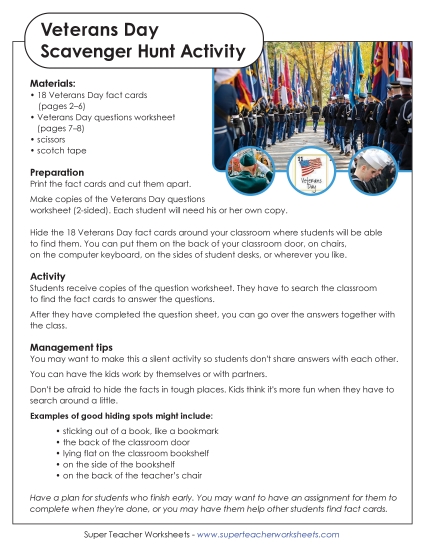
Help your students learn interesting and important facts about Veterans Day with an engaging scavenger hunt activity.


Filing Cabinet
Logged in members can use the Super Teacher Worksheets filing cabinet to save their favorite worksheets.
Quickly access your most used files AND your custom generated worksheets!
Please login to your account or become a member and join our community today to utilize this helpful feature.

(added October 8, 2026)
Written for more advanced readers or to be used as a guided classroom activity, this article gives details about Diwali and its celebrations as well as the story behind the holiday.
(added October 8, 2026)
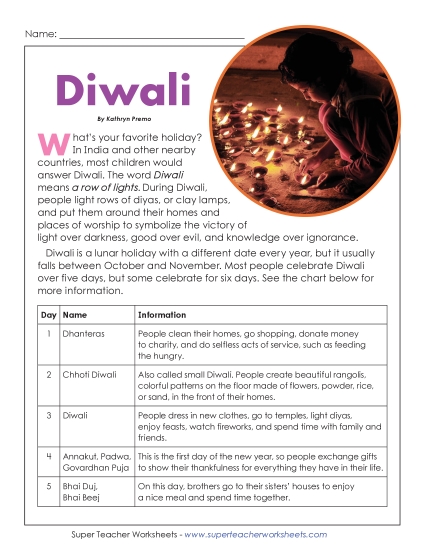
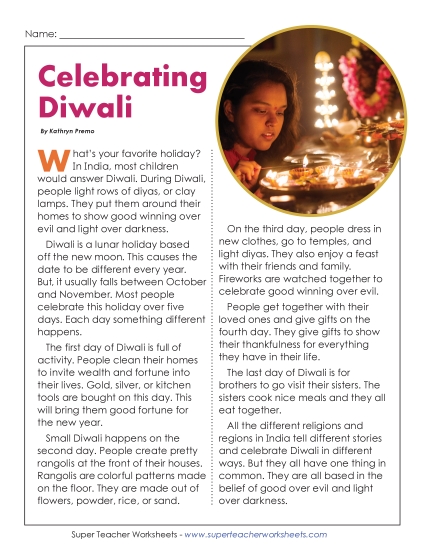
Teach students the basics of Diwali with this nonfiction passage. For those at a 4th grade or higher reading level, it makes great independent work. For those at lower levels, you may wish to read the article as a group and have them answer the questions either independently or together.
(added October 8, 2026)
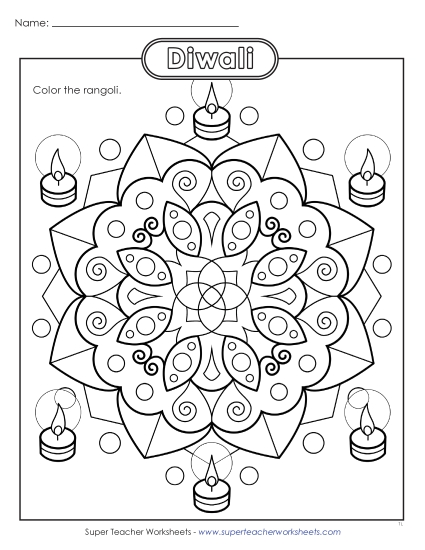
If your students enjoy coloring in rangolis, here is another Diwali-themed coloring page with one!


(added October 8, 2026)
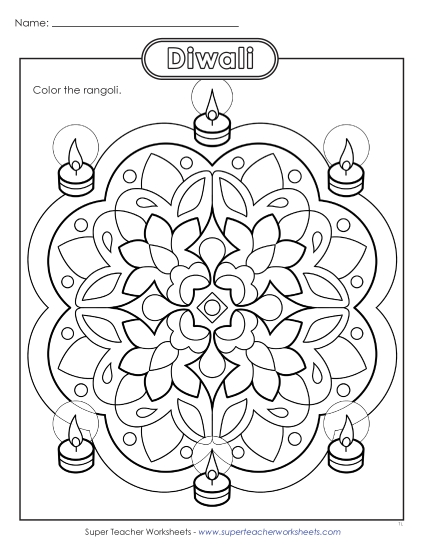
This rangoli coloring page features diyas around an intricate design.
(added October 8, 2026)
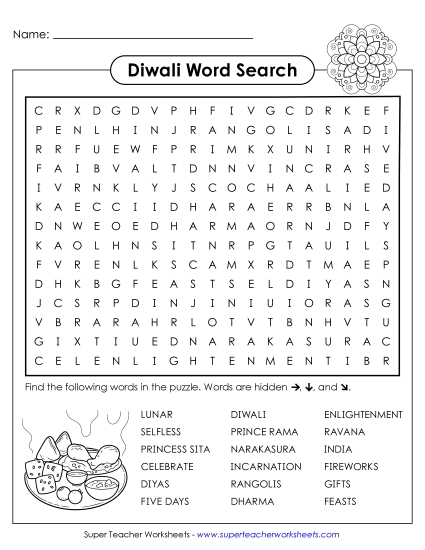
This Diwali word search is a bit harder than our easy version. It features longer and more advanced terms such as Princess Sita, Prince Rama, enlightenment, incarnation, and Narakasura.
(added October 8, 2026)
Look for words like thankfulness, rangolis, lunar, moon, and more in this Diwali-themed word search.
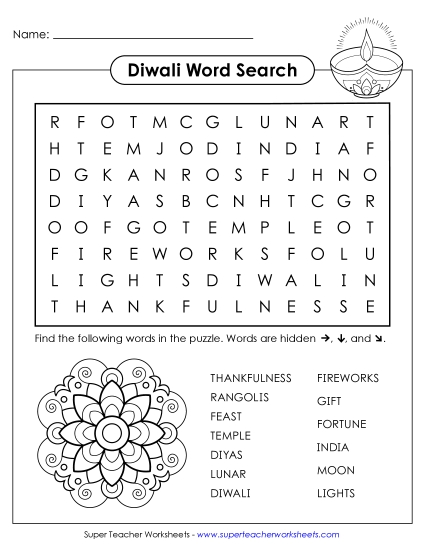
(added October 8, 2026)
Diwali's date is based on the phases of the moon. It always happens during the new moon. With this worksheet, students will fill in the different phases of the moon and write the date that Diwali falls on this year.
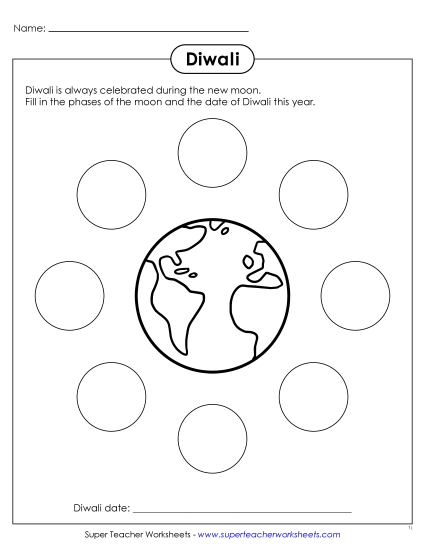
(added October 8, 2026)
Students can color the pictures, write the vocabulary words to complete the sentences, and cut out and attach the pages to create their very own Diwali mini book.
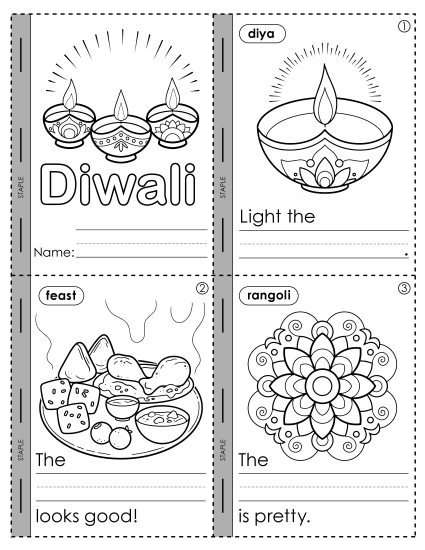
(added October 8, 2026)
This worksheet gives students a brief description of what a rangoli is and instructs them to design their own. With a dotted grid, students can easily include flowers, diyas, or other design elements in their rangoli.

Have you seen the Super Teacher Blog? We post fun, new teaching ideas every month.
Be sure to check it out. Go To STW's Blog
(added October 8, 2026)
Use this Venn diagram to compare and contrast Diwali to another holiday, noting both similarities and differences.
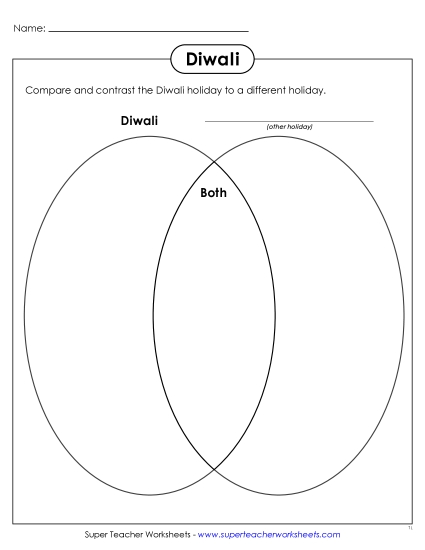
(added October 8, 2026)
Use your favorite shades to color in this intricate rangoli design.
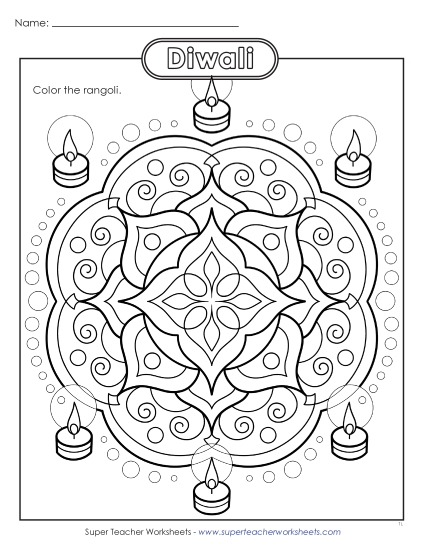
(added October 8, 2026)
Teach your students how the words diya, rangoli, gift, and feast relate to Diwali, and have them practice tracing and writing the words on this worksheet.
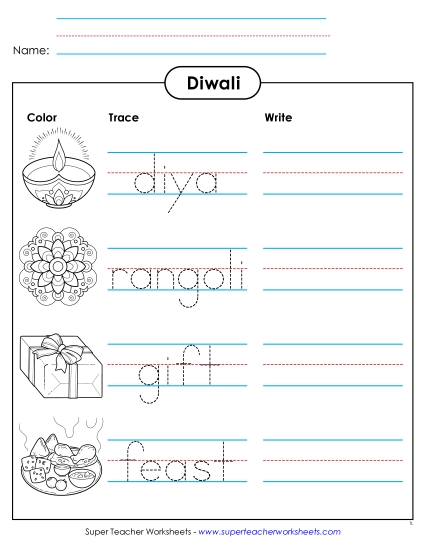
(added October 8, 2026)
Add or subtract to find solutions to all of the problems on the page. Then color according to the key to create a beautiful rangoli.
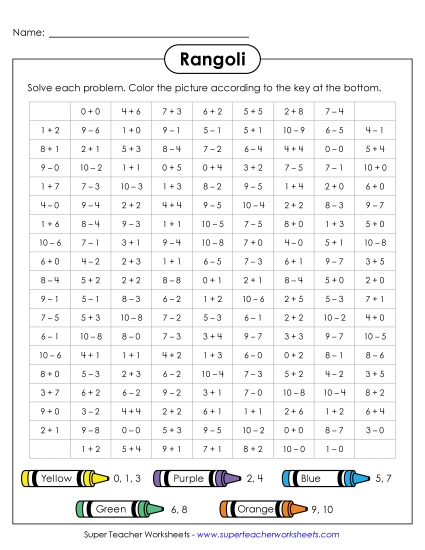
(added October 8, 2026)
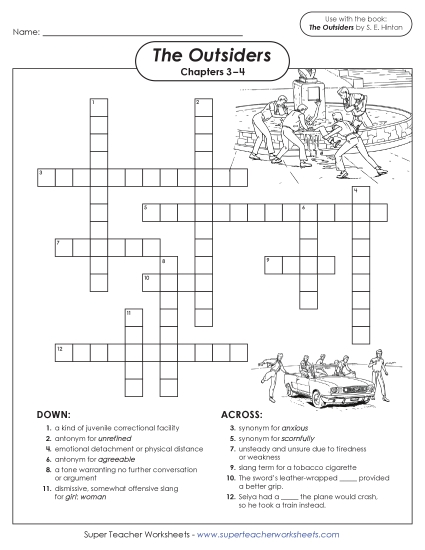
Test your students' knowledge and understanding of the vocabulary terms from this section with a fun crossword puzzle activity.
(added October 8, 2026)
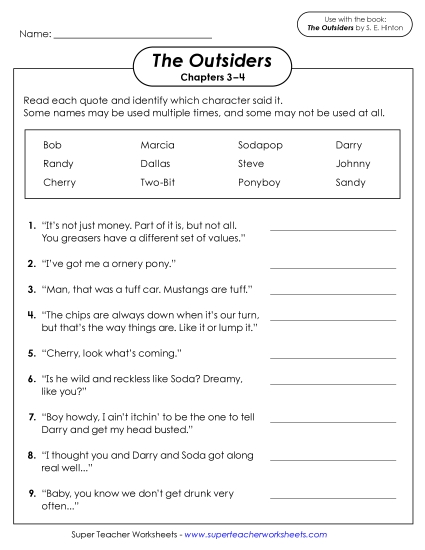
Read the quotes from chapters 3 and 4 and identify which character said them.
(added October 8, 2026)
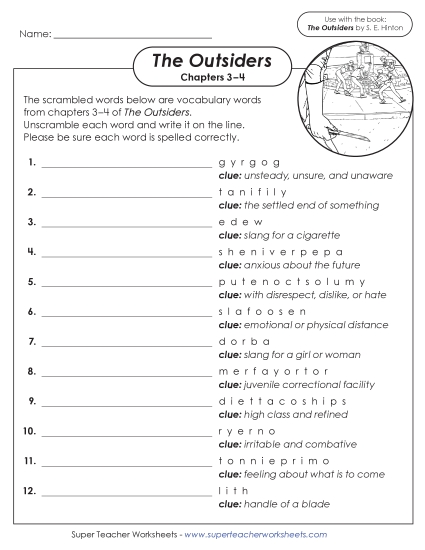
Make sure your students understand the vocabulary words for chapters 3 and 4 of The Outsiders with this word scramble activity.
(added October 8, 2026)
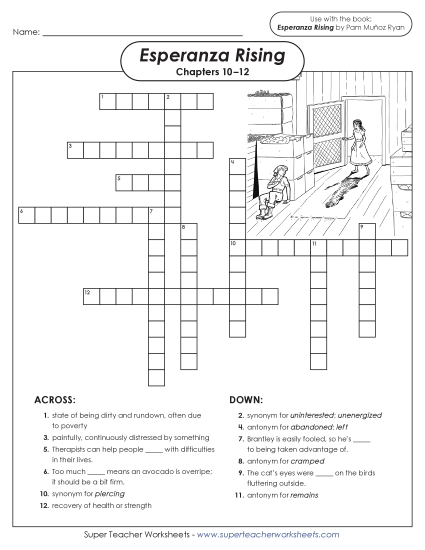
Use the clues to complete this crossword puzzle with words from chapters 10 through 12 of the novel. Terms include tormented, riveted, recuperation, cavernous, and more.
(added October 7, 2026)
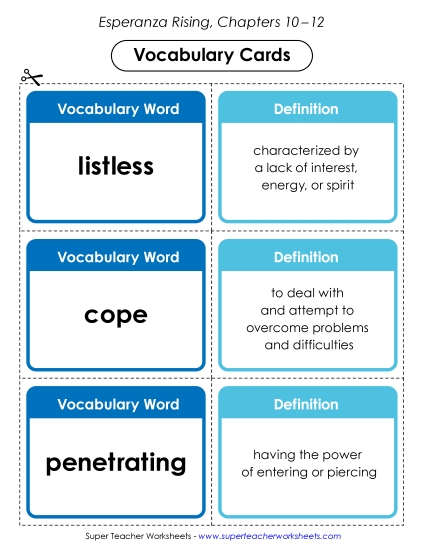
Practice the vocabulary words and definitions for this section of Esperanza Rising with these cards. The following words are included: listless, cope, penetrating, cavernous, riveted, suppleness, susceptible, tormented, squalor, recuperation, accompanied, and remnants.
(added October 7, 2026)
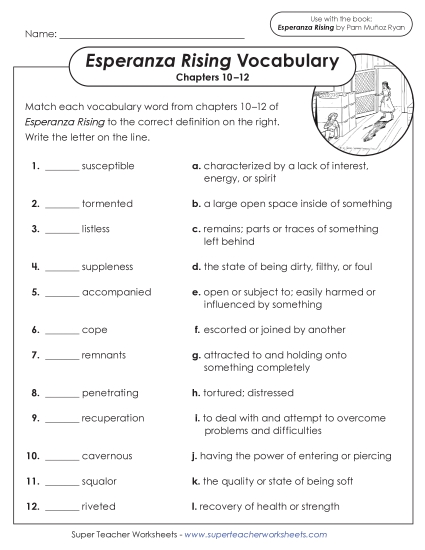
Match the vocabulary words from this section of the novel to their correct definitions by writing the corresponding letters on the lines.
(added October 7, 2026)
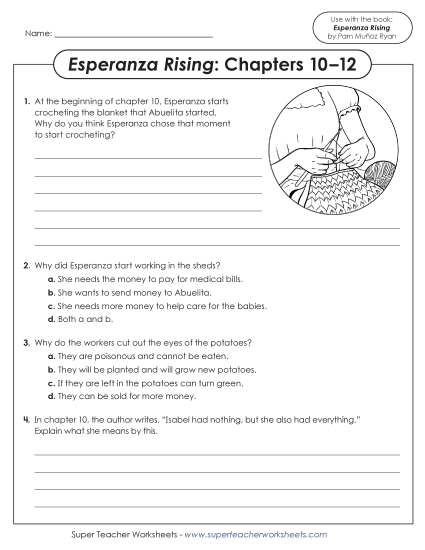
This reading comprehension packet for chapters 10 through 12 of Esperanza Rising includes a mix of short answer and multiple choice questions about the content of this section of the book.
(added October 7, 2026)
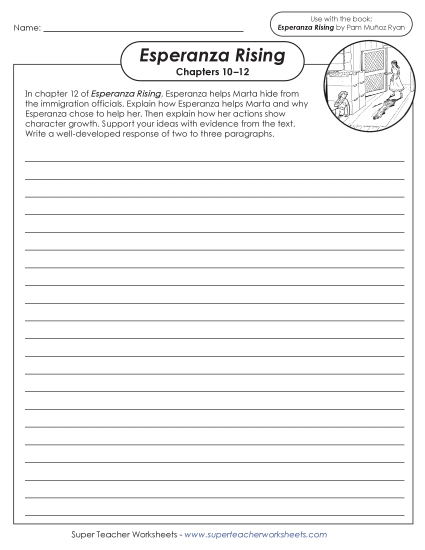
With this writing prompt, students will think about how Esperanza helps Marta hide in chapter 12. They will explain how and why she helped Marta and how her actions show character growth.
¿Habla español?
Many of our worksheets have been translated into Spanish! Click the button below worksheet descriptions to view our Spanish translations. Learn more.
Many of our worksheets have been translated into Spanish! Click the
button below worksheet descriptions to view our Spanish translations. Learn more.(added October 7, 2026)
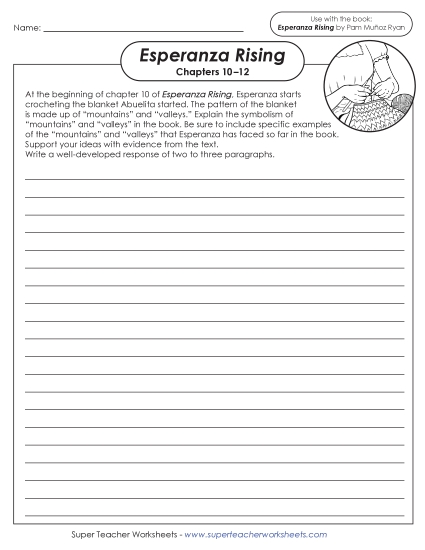
With this writing prompt, students will reflect on the symbolism of mountains and valleys in the book Esperanza Rising by Pam Muñoz Ryan.
(added October 7, 2026)
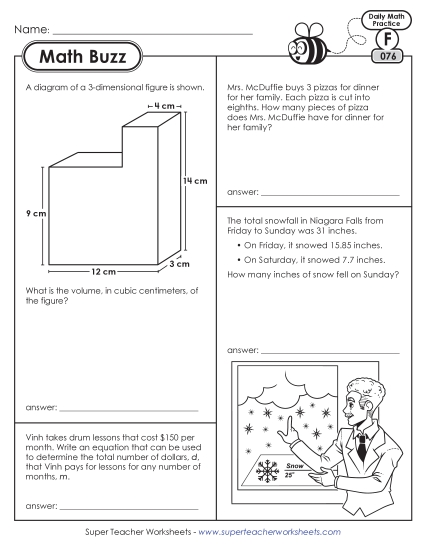
Find volume of 3-dimensional figures, answer word problems, use fraction bars, and more with this week's 6th grade Math Buzz!
(added October 7, 2026)
Keep up with daily math practice and review by using our 6th grade Math Buzz worksheets.
(added October 7, 2026)
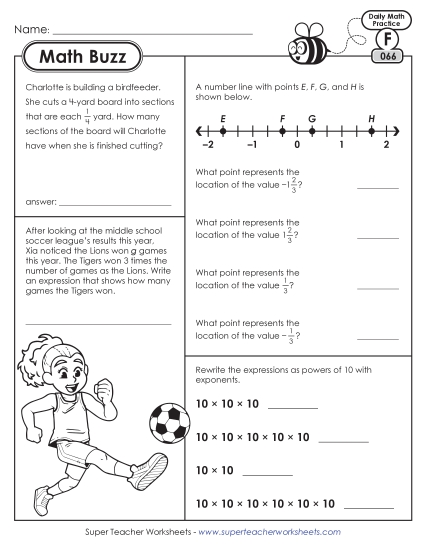
Factor expressions, rewrite expressions as powers of 10 with exponents, find volume of composite shapes, and much more with this week's 6th grade Math Buzz worksheets.
(added October 7, 2026)
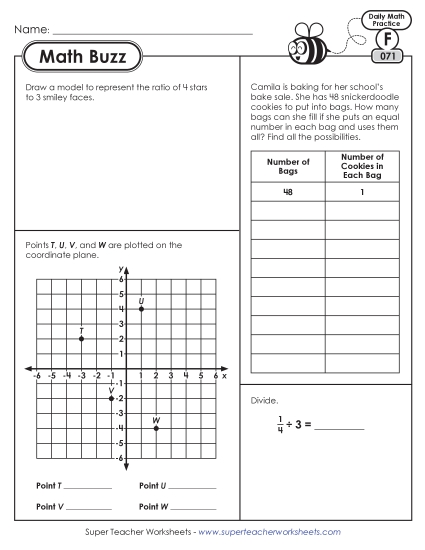
This week's 6th Grade Math Buzz worksheets require students to be able to write algebraic expressions, understand coordinate grids, find greatest common factors, and much more.
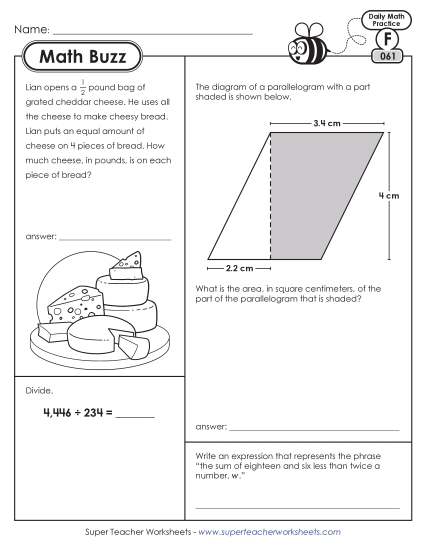
(added October 7, 2026)
Keep those ELA skills fresh with these daily language arts review worksheets, written specifically with 6th grade standards in mind.
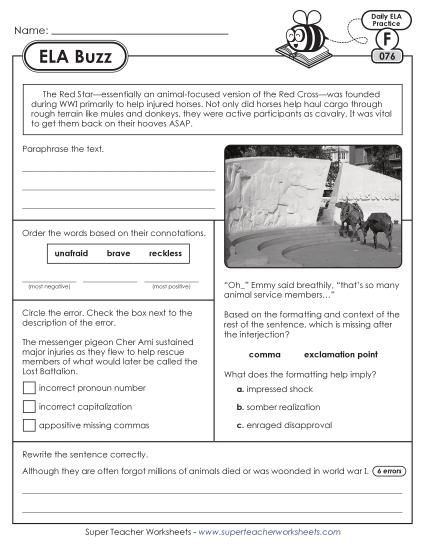
(added October 7, 2026)
Review homophones, prefixes, vague pronouns, and many more 6th grade ELA concepts with this week's set of 6th grade ELA Buzz worksheets.
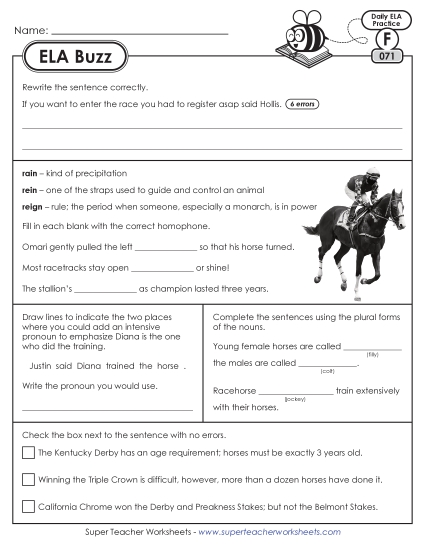
(added October 7, 2026)
You might be near the end of the school year, but that doesn't mean it's time to stop reviewing key math concepts from the year! Practice counting, adding, subtracting, using tens frames, identifying shapes, and more!
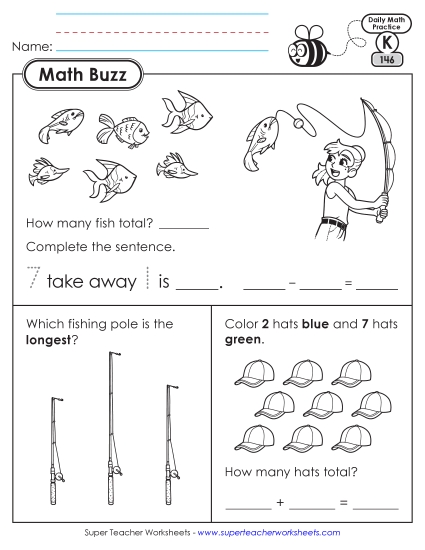
(added October 7, 2026)
This week, students will work with tens frames, trace shapes, complete addition and subtraction sentences, and more!
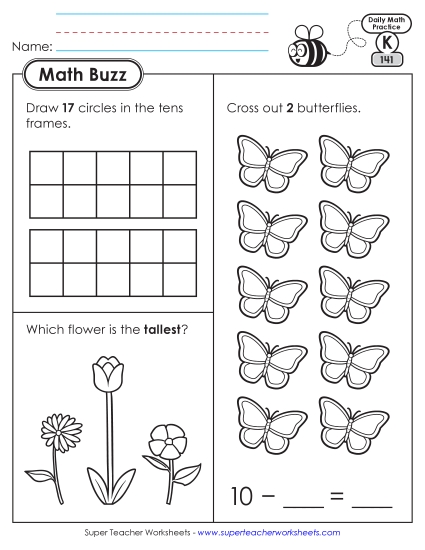
(added October 7, 2026)
Count to 20, trace and identify shapes by their attributes, and much more with these Kindergarten Math Buzz daily review worksheets.
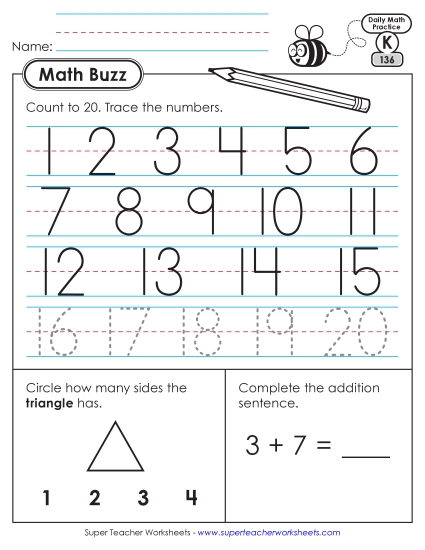
(added October 7, 2026)
Identify shapes with certain attributes, choose the longer of two objects, make subtraction sentences, and more with this week's Math Buzz.
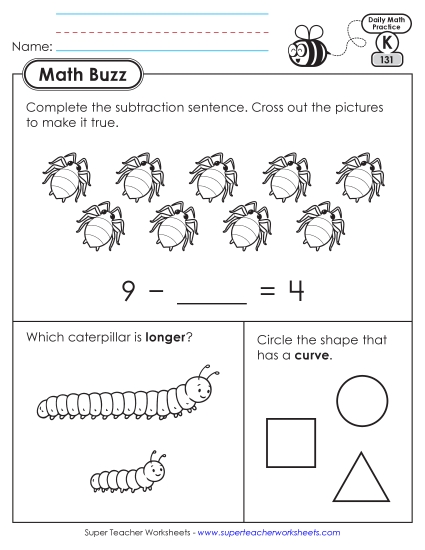
(added October 7, 2026)
Write basic addition sentences, fill in missing numbers in subtraction facts, identify objects of the same size, and more with this week's set of Math Buzz worksheets.
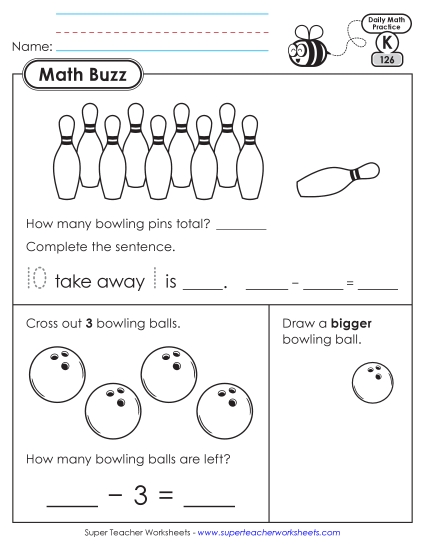
(added October 7, 2026)
Engaging visuals help students practice basic math skills like addition, subtraction, and size recognition.
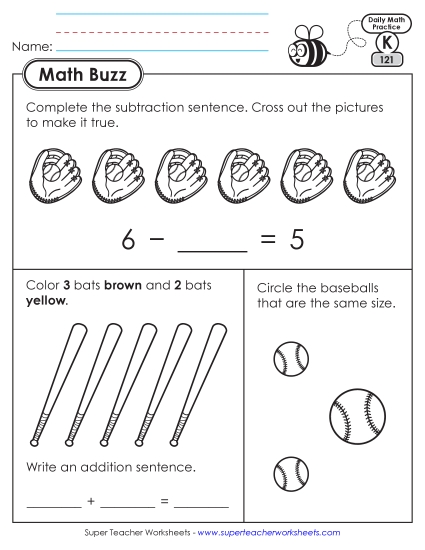
(added October 7, 2026)
Our kindergarten Math Buzz worksheets use visuals to engage students in basic math practice, from subtraction of objects to tens frames.
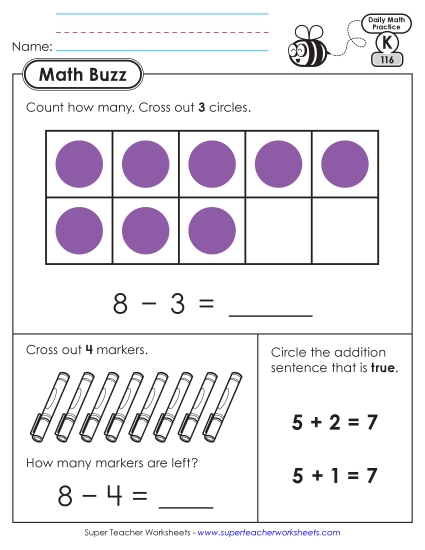
(added October 6, 2026)
Practice subtraction, understanding more and fewer than, and other important kindergarten math skills.
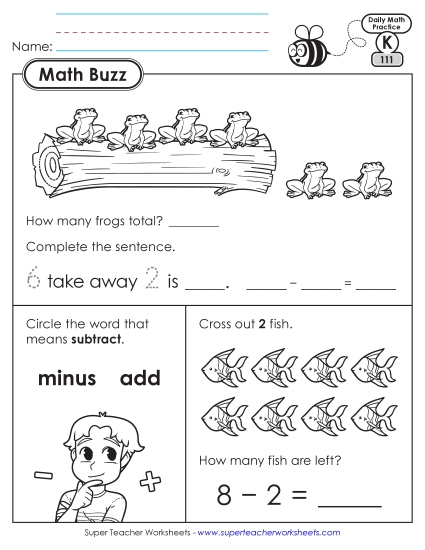
(added October 6, 2026)
Work on addition, subtraction, counting, and more with this week's set of daily math review.
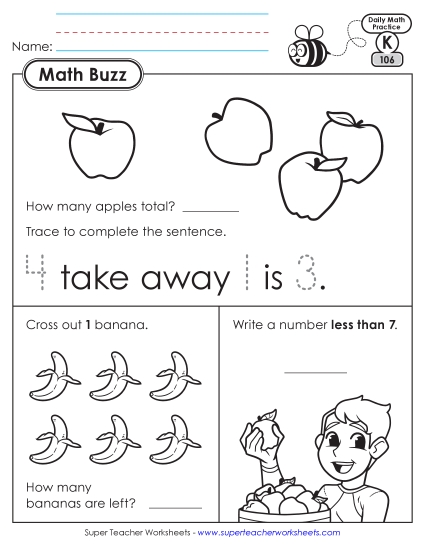
(added October 6, 2026)
Review counting, basic subtraction, the concepts of bigger and smaller, and more with this week's Kindergarten Math Buzz.
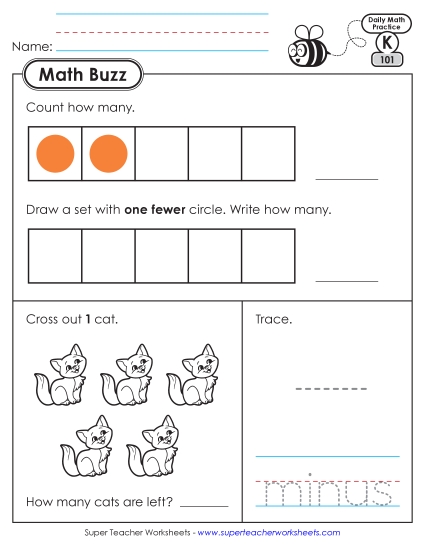
(added October 6, 2026)
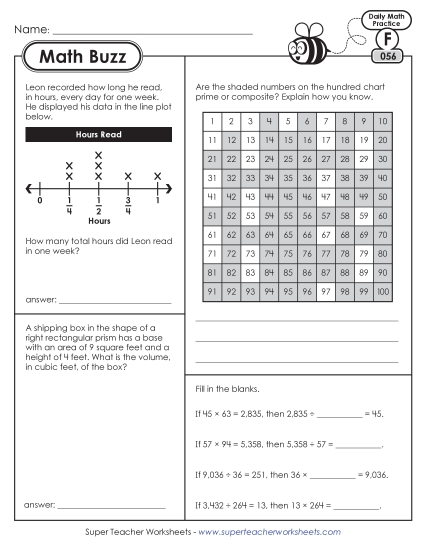
Review important math skills daily with our Math Buzz activities. This week's grade 6 worksheets reinforce skills involving writing statistical questions, reading line plots, equivalent expressions, and more.
(added October 6, 2026)
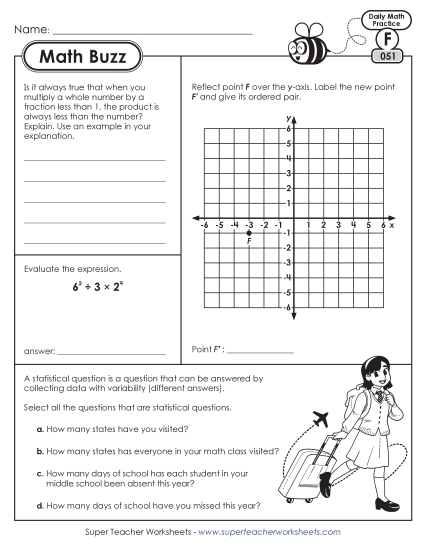
Review important math skills for sixth graders with this week's set of daily review worksheets. Skills include reflections, statistical questions, and exponents.
(added October 1, 2026)
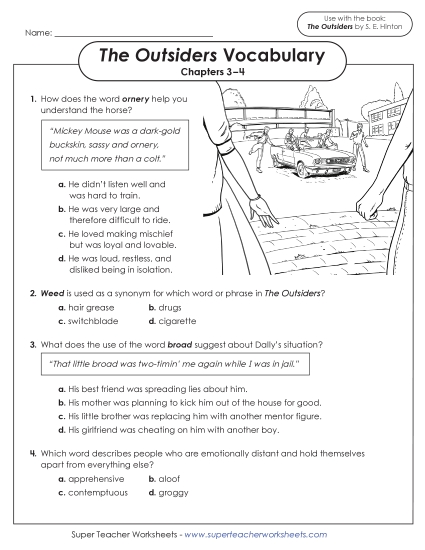
Use context clues and your knowledge of the vocabulary terms from this section of the book to complete this worksheet.
(added October 1, 2026)
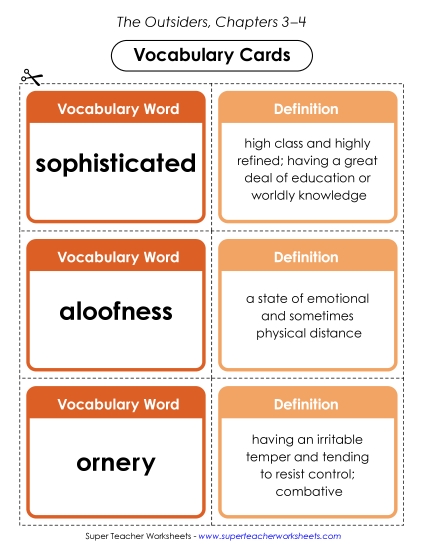
The vocabulary words for this section are sophisticated, aloofness, ornery, broad, weed, hilt, finality, apprehensive, contemptuously, groggy, reformatory, and premonition. Use these vocabulary cards to help practice the terms.
(added October 1, 2026)
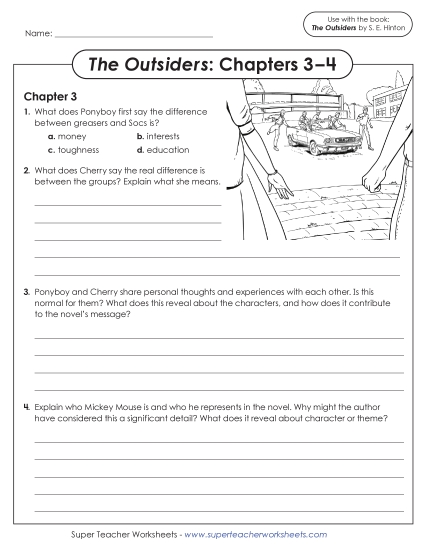
These reading comprehension questions cover chapters 3 and 4 of The Outsiders and include short response and multiple choice questions involving theme, context clues, symbolism, and more.
(added October 1, 2026)
In this extended response activity, students will describe the violent interaction in the park between the greasers and Socs. They will also explain how it differs from student disagreements today, how it is similar, and delve into the details of confrontation among groups.
(added October 1, 2026)
In chapter 4, Ponyboy and Johnny decide to run away rather than seek help from authorities or family members. With this extended response worksheet, students will consider how their socioeconomic status and family experiences likely shaped this choice.
(added October 1, 2026)
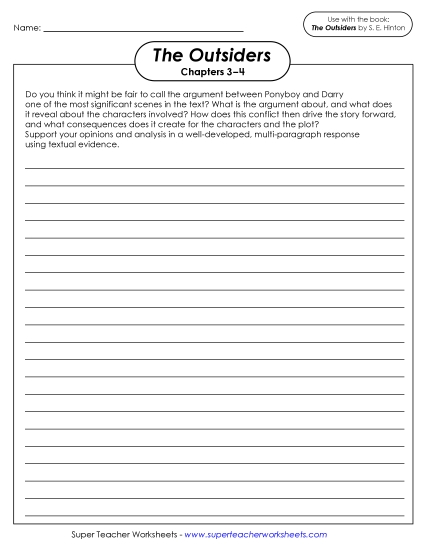
This writing prompt asks students to reflect on the significance of the argument between Darry and Ponyboy, describe the argument, and tell what it reveals about the characters.
(added October 1, 2026)
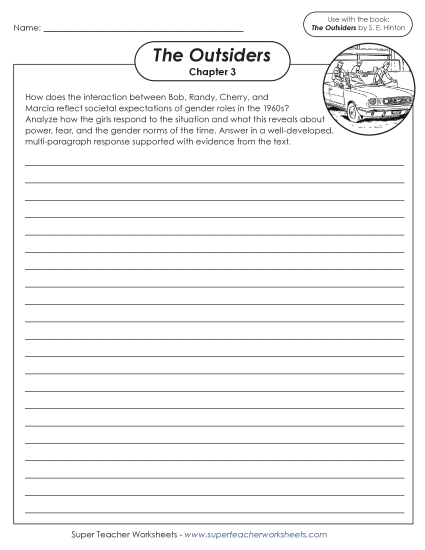
This printout prompts students to write about the interaction that takes place between Bob, Randy, Cherry, and Marcia in chapter 3, focusing on its reflection of societal expectation of gender roles during the time period.
(added October 1, 2026)
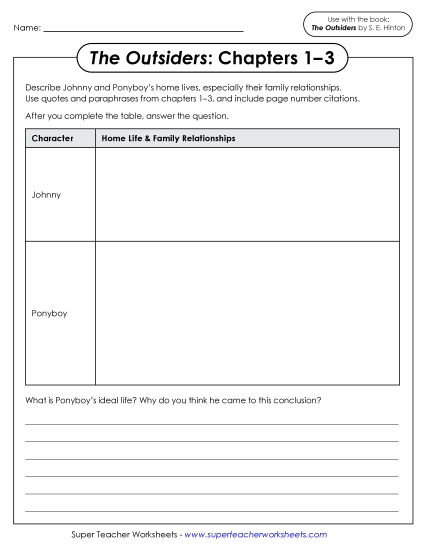
Once students have finished reading chapter 3, they can complete this graphic organizer on Johnny and Ponyboy's home lives and family relationships.
(added October 1, 2026)
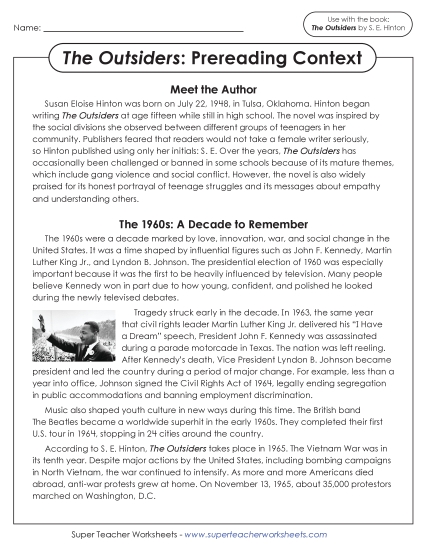
Read a short passage about S. E. Hinton and what inspired her to write The Outsiders. Then read some historical background about the 1960s and answer the questions.